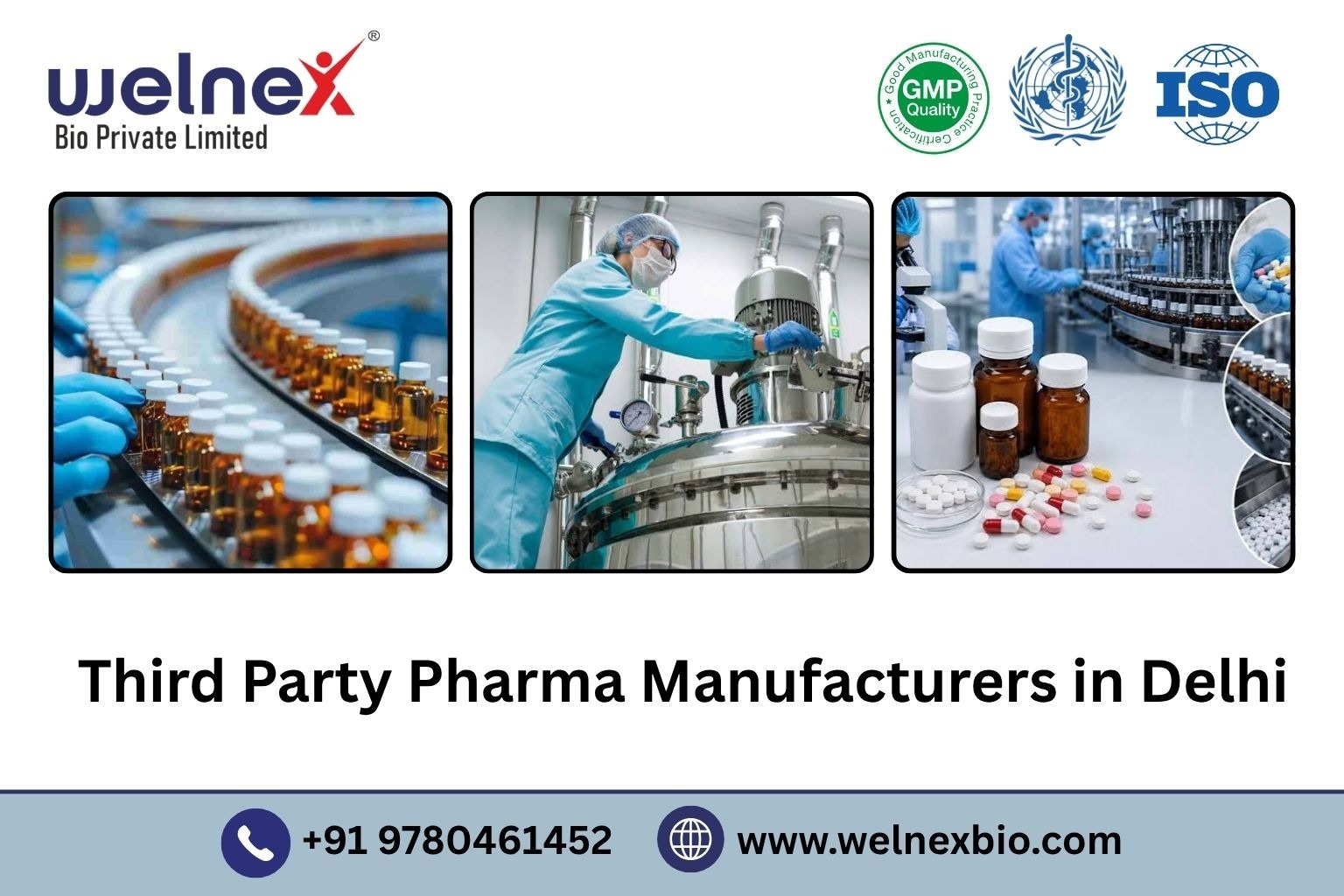
Third Party Pharma Manufacturers in Delhi — Complete 2026 Guide
Delhi runs on trade, and pharma is no exception. Walk through Bhagirath Palace or Naya Bazar and you'll see just how much of India's medicine distribution actually passes through this city. But here's the thing most people searching for third party pharma manufacturers in Delhi eventually figure out — a lot of the actual production doesn't happen inside Delhi itself. It happens around it, in places like Baddi, Sonipat, Faridabad, and pockets of industrial land in Noida and Gurugram, with Delhi serving as the commercial and distribution nerve center tying it all together.
That's not a red flag, by the way. It's just how the region works, and once you understand it, sourcing gets a lot easier. This guide is for anyone trying to find a manufacturing partner to serve their Delhi-based pharma business, whether that's a PCD franchise, a new marketing company, or an existing brand looking to add a manufacturer to their supply chain. We'll cover how the region's supply chain actually works, why demand for this model keeps climbing, what to check before signing anything, and the mistakes that tend to trip up first-time buyers.
Why This Model Has Taken Off Around Delhi
A few forces are pushing more businesses toward third party manufacturing right now, and Delhi's position as a trading hub amplifies most of them. Lifestyle-related conditions — diabetes, hypertension, joint issues, vitamin deficiencies — have climbed steadily across urban India, and Delhi's dense, fast-paced population is right at the center of that trend. That alone keeps demand for a wide range of medicines high and fairly predictable.
At the same time, the number of new PCD franchise businesses and small pharma marketing companies launching in and around Delhi keeps growing. Most of them start with the same realization: building a factory before you've even validated your market doesn't make sense. Third party manufacturing lets them test their product-market fit with real orders instead of sinking capital into infrastructure first.
There's also a growing shift toward ayurvedic, herbal, and nutraceutical products, alongside standard allopathic ranges, which has pushed manufacturers to broaden their catalogues even further. For someone sourcing out of Delhi, this means more options than ever to build a diverse product line from a single, well-established partner.
Delhi's Real Role in the Pharma Supply Chain
Delhi's strength has never really been manufacturing capacity. It's logistics, trade relationships, and market access. The city sits at the center of a road and rail network that reaches every corner of North India, and its wholesale markets have functioned as a distribution backbone for decades. Pharma brands headquartered in Delhi typically use that positioning to move product fast across Punjab, Haryana, UP, Rajasthan, and beyond.
Manufacturing itself tends to sit in a ring around the city. Baddi in Himachal Pradesh remains one of the largest pharma manufacturing clusters in the country, and plenty of Delhi-facing companies either operate there or partner closely with facilities in that belt. Sonipat and parts of Haryana have also built up meaningful pharma manufacturing infrastructure. Some smaller-scale production and packaging does happen within Delhi's own industrial areas like Okhla, Bawana, and Narela, though these tend to be smaller operations compared to the larger, purpose-built facilities further out.
So when a company advertises itself as a third party pharma manufacturer serving Delhi, it usually means exactly that — serving Delhi's market and businesses, while the physical plant sits somewhere in this wider NCR-and-beyond belt. Once you know this going in, you stop being surprised by it and start focusing on what actually matters.
Getting Into a Third Party Manufacturing Arrangement
If you're new to this, the basic idea is that you hand off production entirely. A licensed manufacturer takes your formulation requirements, or shows you their existing catalogue, and produces the finished medicine under your brand name. They deal with sourcing raw materials, running the actual manufacturing process, testing every batch, and packaging it the way you want. You never touch any of that. Your energy goes into building relationships with doctors, onboarding distributors, and growing your market presence.
The appeal is obvious once you think about what the alternative costs. A compliant, GMP-certified manufacturing setup easily runs into crores of rupees once you account for machinery, facility build-out, and years of regulatory approvals before you can even legally produce a tablet. Going through a third party manufacturer sidesteps almost all of that. Brands regularly go from a signed agreement to their first delivered batch in a matter of weeks.
For a Delhi-based business specifically, this arrangement plays especially well because you get to keep your commercial operations centered where the market access already is, while sourcing production from wherever makes the most sense — usually the Baddi belt or nearby Haryana facilities — without needing your team physically present at the plant day to day.
What You'll Typically Find on Offer
Manufacturers serving the Delhi market tend to run fairly broad catalogues, since the city's pharma businesses cover just about every therapeutic segment imaginable. You'll commonly see cardiac range and antidiabetic range formulations, given how large the chronic-therapy market is across North India. Gynae range products come up a lot too, alongside general tablets, capsules, and soft gelatin capsules for anyone working with oil-based or fat-soluble formulations.
Syrups and pediatric products remain steady sellers as well, since Delhi's population base includes a huge number of families and children needing consistent access to that category. If your product plan spans a few of these, it's worth checking early whether one manufacturer can realistically cover your whole list, since consolidating tends to simplify both your paperwork and your negotiating position on pricing.
The Questions That Actually Separate Good Partners From Bad Ones
Most people ask about certifications and MOQ, which are fine starting points but don't tell you the whole story. WHO-GMP certification should be treated as a bare minimum, not a differentiator — ask for the actual certificate, not just a claim on their website. Beyond that, dig into how long they've specifically been producing the categories you need, since a broad catalogue doesn't always mean deep expertise in every segment listed.
Ask how they handle quality complaints that come in after a product has already shipped. This tells you a lot about how the relationship will actually feel once something inevitably goes slightly wrong, which happens in every manufacturing partnership eventually. Ask, too, about their experience specifically working with Delhi-based or North India-focused brands, since a manufacturer already comfortable with your target market's regulatory quirks and demand patterns will save you time later.
If distance allows, visit the actual production facility rather than relying only on calls and documentation. A short trip out to Baddi or wherever the plant sits is a small price for the clarity it gives you before committing to a long-term supply relationship.
Setting Up the Agreement Properly
Whatever manufacturer you land on, get the essentials written into a formal agreement before any production starts. That means a clear product list with exact composition and dosage, transparent pricing with MOQ spelled out per product rather than as a blanket figure, defined responsibility for batch testing and quality assurance, realistic timelines that account for where the facility physically sits, confidentiality protections around your brand and any custom formulation requests, and a clear process for what happens if a batch fails testing or a complaint comes in post-delivery. Getting this right at the start avoids most of the friction that shows up later in these relationships.
What Actually Drives Pricing in This Market
Delhi's competitive pharma trading environment means pricing gets compared aggressively, so it helps to understand what actually moves the number on a quote. Raw material sourcing plays a big role — imported actives or specialty excipients cost more than standard domestic ones. Batch size matters too, since smaller MOQs typically carry a higher per-unit cost until you reach a manufacturer's efficient production scale.
Packaging complexity adds up quickly as well. A simple strip pack costs far less than a printed carton with inserts and tamper-evident sealing. Testing and documentation requirements, especially for categories like gynae or pediatric products where stability data matters more, can also shift the final price. The smartest approach is asking for a fully itemized quote rather than a single number, so you can actually see where your money is going and compare manufacturers on equal footing rather than guessing at what's bundled into a lump sum.
Choosing Between a Nearby Manufacturer and One Further Out
A common question that comes up is whether it's better to work with something physically closer to Delhi versus a well-established facility further away in, say, Panchkula or elsewhere in North India. Honestly, distance matters less than people initially think. What matters far more is responsiveness, certification, and how well the manufacturer communicates during production.
A facility two hours away that answers your calls quickly, sends samples on time, and has a proven quality track record will serve you better than a facility fifteen minutes from your office that's slow to respond or vague about documentation. That said, for your first few orders, having a manufacturer within a reasonable driving distance does make facility visits and relationship-building easier, which is worth factoring in if you're still building trust with a new partner.
Mistakes First-Time Buyers Make in This Market
A recurring pattern among newer buyers in the Delhi market is chasing the lowest quote without checking why it's lower. Sometimes it's genuinely a more efficient manufacturer, but sometimes it reflects compromised raw material sourcing or a shortcut somewhere in the quality process. Another common mistake is not verifying which specific therapeutic categories a manufacturer's license actually covers, since "we manufacture everything" claims don't always hold up under scrutiny.
People also tend to skip reference checks entirely, relying only on a sales conversation and a polished catalogue. A quick call to an existing client, especially one operating in a similar Delhi-facing distribution model, can reveal a lot that a manufacturer's own pitch won't. And finally, rushing the agreement — signing something vague just to get production started faster — tends to cause far more delay and cost later than taking an extra few days to get the terms right upfront.
Conclusion
If you're looking for third party pharma manufacturers in Delhi, you're really evaluating a network that stretches well beyond the city itself, into Baddi, Sonipat, and the broader NCR industrial belt. That's a strength, not a workaround — it gives you access to established, WHO-GMP certified production without needing a facility inside city limits. Spend your energy checking certification, product experience, and how the manufacturer handles problems, rather than worrying about the exact pin code on their factory address.
Looking for a reliable third party pharma manufacturer serving the Delhi market? Welnex Bio Pvt. Ltd., based in Panchkula, offers Cardiac Range, Antidiabetic Range, Gynae Range, Pediatric Range, and a wide portfolio of tablets , capsules , soft gelatin capsules , and syrups under WHO-GMP compliant manufacturing.
Contact us to discuss your requirements.
FAQs
1. Is Delhi itself a good place to look for a manufacturing facility, or should I focus on Baddi and nearby areas instead?
Focus less on where the plant physically sits and more on certification, product range, and reliability. Many strong manufacturers serving Delhi operate out of Baddi or Haryana, and that's completely standard practice in this industry.
2. How much does distance from Delhi actually affect delivery timelines?
Less than people assume, given how well-connected the region's road network is. A facility in Baddi or Sonipat can typically dispatch to Delhi-based distributors just as efficiently as something located within the city.
3. Do I need to register my business separately to work with a manufacturer outside Delhi?
Generally no, beyond your standard drug trading license and GST registration, though it's worth confirming current requirements with a consultant since rules can vary by state and product category.
4. Can a single manufacturer handle a product range spanning multiple therapeutic categories?
Often, yes. Many manufacturers serving the Delhi market carry a wide catalogue across cardiac, antidiabetic, gynae, and general formulations, which makes consolidating your sourcing with one partner realistic for most new brands.
5. What should I do if I can't find a manufacturer with a strong track record in a specific niche category I need?
Ask directly about their willingness to develop a custom formulation, and request references from any past clients in that specific segment. A manufacturer without deep experience in one narrow category can sometimes still deliver well if they're upfront about the development process and timeline involved.
6. Is it worth negotiating pricing hard on a first order, or should I wait until I have volume?
Most manufacturers offer their most flexible pricing once you're placing repeat, growing orders. On a first order, it's usually more useful to negotiate on things like sample availability, faster turnaround, or flexible packaging terms than to push hard on price alone.
7. How many manufacturers should I get quotes from before deciding?
Three to four serious quotes is usually enough to get a realistic sense of the market rate and spot outliers, without dragging the decision out so long that you lose momentum on your launch timeline.